
EEOC Lawsuit against Coca Cola
On February 17, 2026, the EEOC filed a lawsuit in the U.S. District Court for the District of New Hampshire against Coca-Cola Beverages Northeast (Case No. 26-cv-00115). The lawsuit alleges that the company engaged in unlawful sex discrimination by excluding male employees from a company-sponsored networking event. The case highlights renewed federal scrutiny of workplace DEI programs.
The EEOC’s Legal Claims
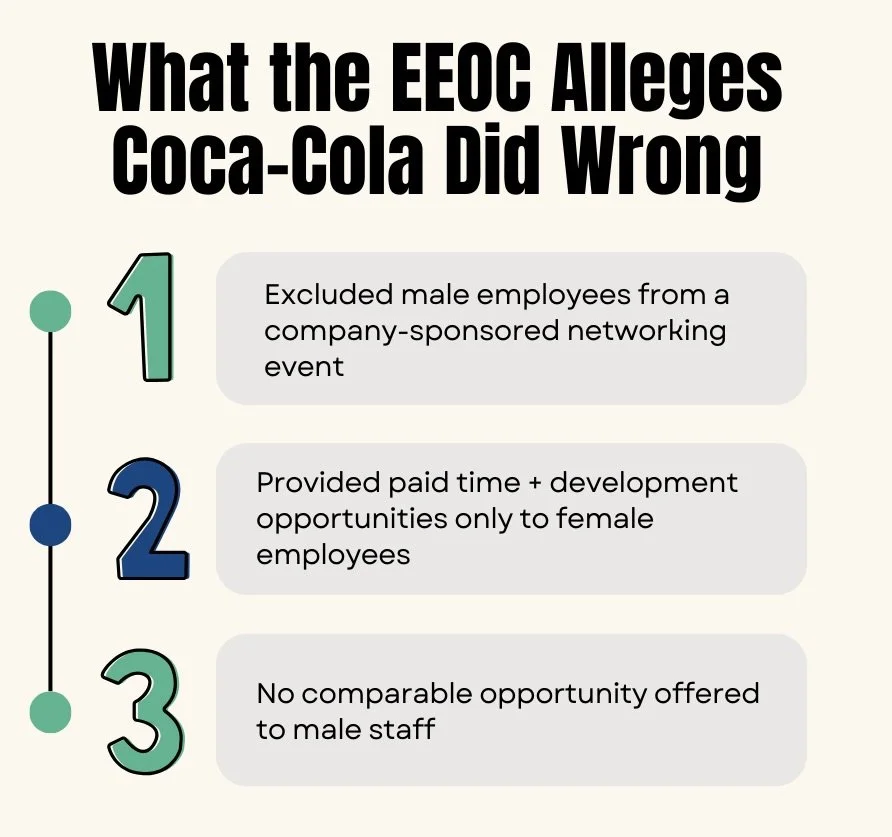
EEOC claims Coca-Cola denied male employees equal access to a professional opportunity.
According to the EEOC’s complaint, Coca-Cola Beverages Northeast organized a two-day networking event in September 2024 at the Mohegan Sun Casino and Resort in Connecticut. The event was designed as a professional development and networking opportunity for employees within the company. The EEOC alleges that the company invited only female employees to attend the event, and male employees were not offered a comparable opportunity. The complaint claims that the women who participated were excused from their regular job duties for two days and were paid their normal wages without having to use vacation time or other leave.
The EEOC alleges that the company’s conduct violated Title VII of the Civil Rights Act of 1964, which prohibits employers from discriminating against employees based on protected characteristics such as race, color, religion, national origin, and sex. The EEOC’s position is that excluding male employees from a work-related opportunity solely because of their sex constitutes disparate treatment under Title VII.
The complaint seeks monetary relief for the affected male employees, an order requiring the company to implement policies to ensure equal access to employer-sponsored events, and a permanent injunction prohibiting the company from discriminating against employees on the basis of sex in the future.
Implications for Workplace Diversity Programs
This lawsuit shows that the federal government intends to pursue EEOC enforcement and potential litigation against workplace DEI programs. The EEOC is also pursuing a subpoena enforcement action against Nike related to allegations that the company engaged in disparate treatment of white employees.
Although many companies offer leadership or networking programs targeted at specific groups, the current EEOC enforcement priorities indicate that such programs should not exclude other employees. For example, an employer could host a panel discussion focused on issues women face in the workplace, but to avoid EEOC scrutiny the event invitation could be extended to all employees, not just women.
Although Coca-Cola may ultimately prevail in litigation, legal challenges to company programs can be costly and time-consuming. The EEOC’s position in this case underscores that while employers may promote diversity and inclusion, programs that exclude employees from professional opportunities based solely on protected characteristics may expose companies to liability under Title VII.
Coca-Cola’s answer to the complaint is due by April 18, 2026. We will continue to provide updates on developments as this case progresses.