
US Department of Labor Proposes Changes to Independent Contractor Regulations
The U.S. Department of Labor’s Wage and Hour Division proposed a rule clarifying when a worker is an employee or an independent contractor under the Fair Labor Standards Act (FLSA) and related federal laws. This proposal would rescind the DOL’s 2024 final rule and revert to an analysis similar to the 2021 approach. The analysis under the proposed rule would also apply to the Family and Medical Leave Act (FMLA) and the Migrant and Seasonal Agricultural Worker Protection Act, both of which rely on the FLSA’s definition of employees.
The proposed rule applies an “economic reality” test to assess whether a worker is an independent contractor or an employee. The two key factors are:
The nature and degree of control over the work, and
The worker’s opportunity for profit or loss based on initiative and/or investment.
Additional factors include skill required, permanence of the relationship, and whether the work is part of an integrated unit of production.
The proposal includes eight fact‑specific examples demonstrating how the factors listed in 29 CFR § 795.105(d) can be applied to determine when a worker is an employee or an independent contractor. One example from the proposed rule is included below:
“(2)(i) Example. An individual accepts assignments from a company that provides an app-based service linking those who need home-repair work with those who perform home-repair work. The individual is able to meaningful[ly] increase his earnings by exercising initiative and business acumen and by investing in his own equipment. The company, however, has invested millions of dollars in developing and maintaining the app, marketing itself, maintaining the security of information submitted by actual and prospective customers and workers, and monitoring customer satisfaction with the work performed.
(ii) Application. The opportunity for profit or loss factor favors independent contractor status for the individual, despite the substantial difference in the monetary value of the investments made by each party. While the company may have invested substantially more in its business, the value of that investment is not relevant in determining whether the individual has a meaningful opportunity for profit or loss through his initiative, investment, or both.”
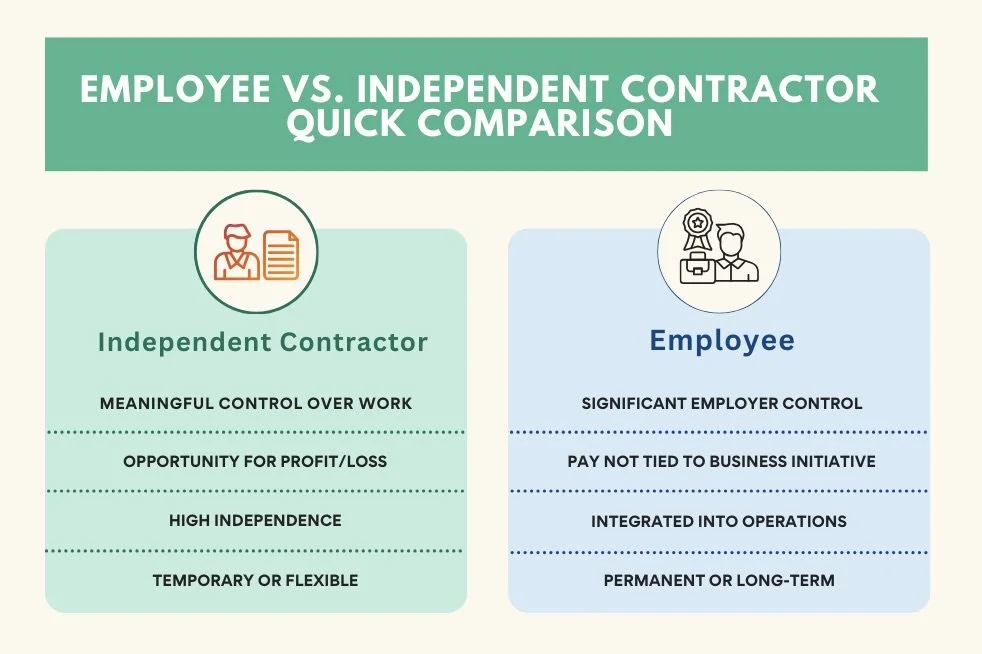
How the DOL distinguishes contractors from employees under the proposed rule.
Practical Implications
Worker classification is an important area of labor & employment law for companies to stay up to date on (see our earlier post on the risks of misclassification of workers at startups). Companies should review their agreements with their workers and ensure that they are properly classifying independent contractors and employees, and that hiring documents and company policies reflect the classifications.
The proposed rule is not in effect yet, and the public comment period goes through April 28, 2026. The DOL will then review comments and consider revisions to the rule before publishing a final rule with an effective date. Any final rule could face legal challenges in court that could delay implementation. We will continue to provide updates on developments.
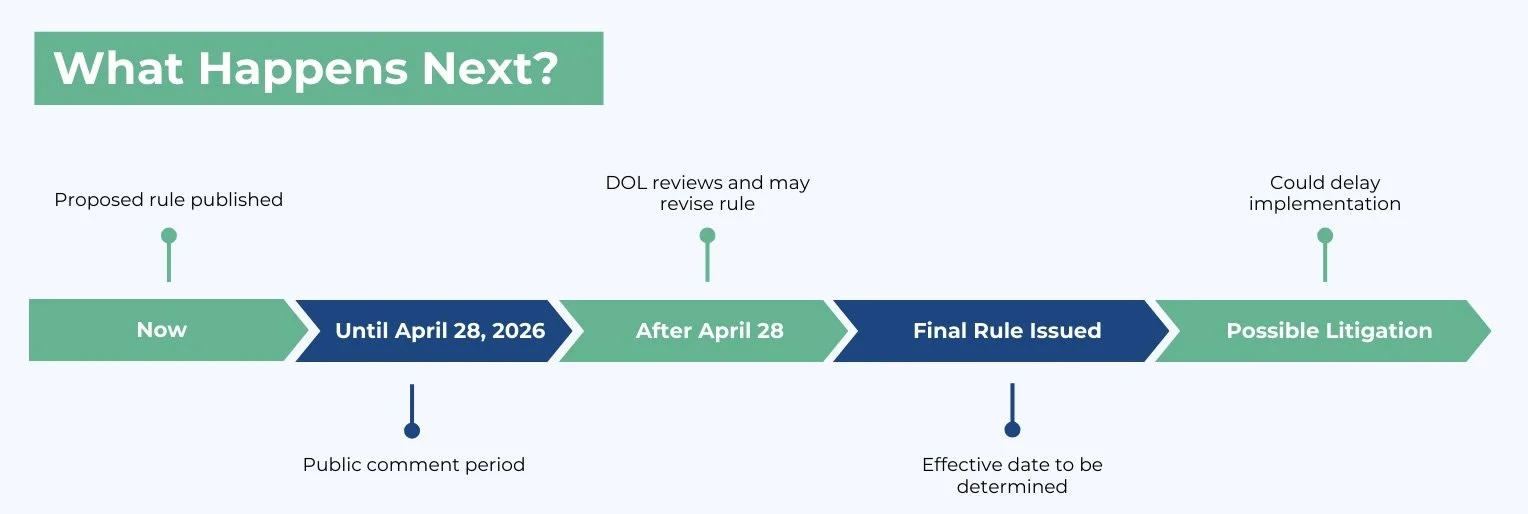
The rule is not final—here’s the regulatory timeline.