
Legal Considerations for Startup Interview Questions: How to Hire Effectively Without Inviting Legal Risk
When you’re building your business, bringing on new team members is an exciting process. Successful new hires can help take your business to the next level by driving performance and growth, but missteps during the interview process can also expose your growing company to potential discrimination claims or even litigation. Your startup may not have formal HR infrastructure yet, but that makes it even more important to understand what kinds of interview questions are permissible and which ones create legal risk.
Core legal principals
Employers are bound by federal, state, and in some cases local anti-discrimination laws. See our earlier post on the startup’s guide to navigating employment law: https://www.frymanpc.com/blog/the-startups-guide-to-navigating-employment-law
It’s illegal to make hiring decisions based on race, gender, age, or other protected classes. Interview questions should relate to the candidate’s ability to perform the job, not seek information about protected characteristics.
Pitfalls of “Fit” Questions
Interviews can be a way to see how well someone will fit in with the team culture, and it is possible to do that, but it’s best to do so in terms of work ethic, collaboration skills, and adaptability to new roles, rather than asking questions that could cross legal lines.
For example, rather than asking an older candidate if they think they’ll fit in with younger co-workers or be comfortable with a supervisor who is younger than they are, questions could be framed as:
“How do you prefer to collaborate in fast-moving teams?”
“Tell me about a time you adapted to a new or evolving company culture.”
These questions focus on experience and skills, rather than asking the candidate potentially discriminatory questions based on their age.
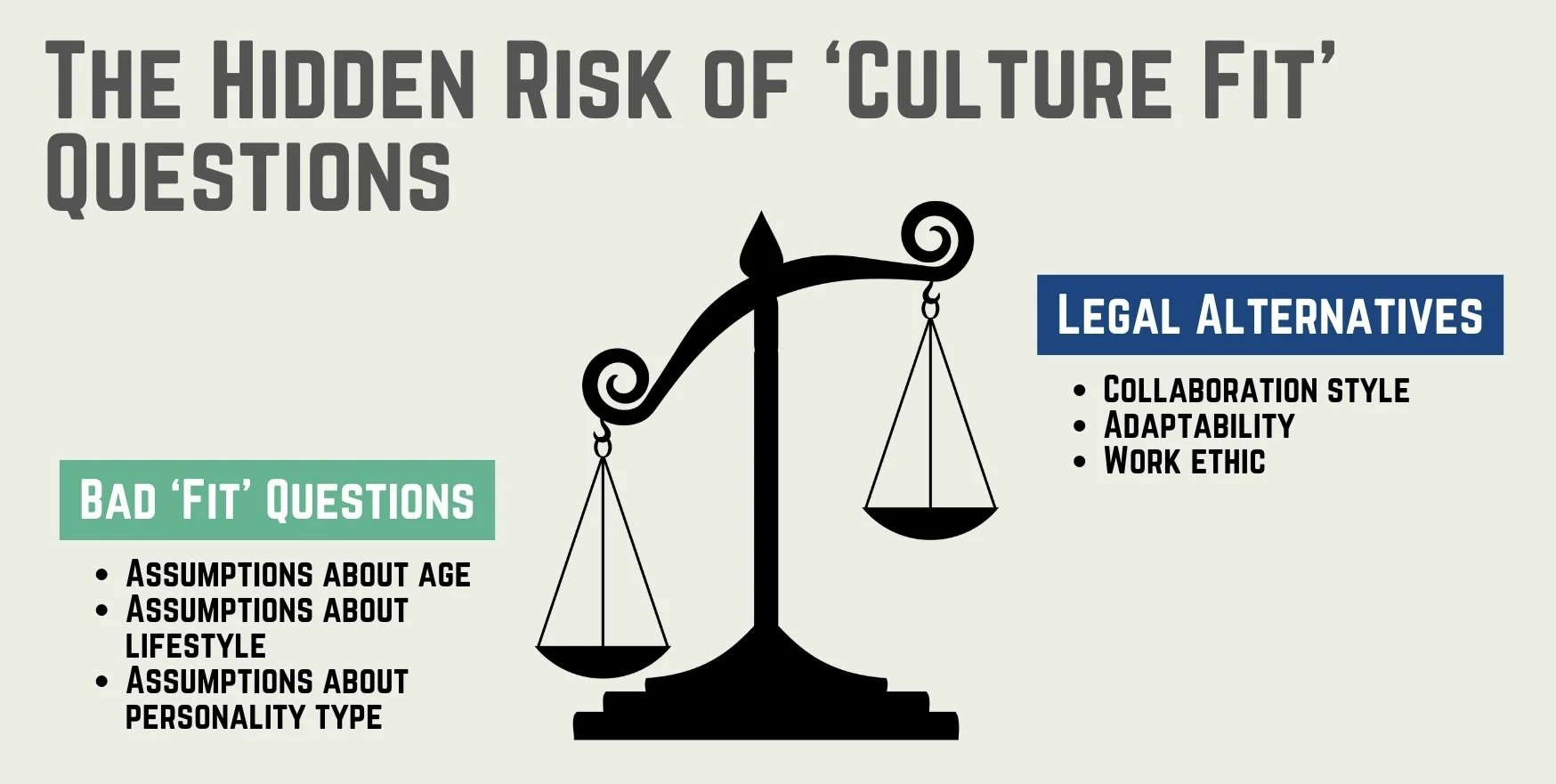
Evaluate culture fit without touching protected characteristics.
Consistency and documentation as a legal safeguard
When hiring a new employee, make sure to have a clear job description before starting the process, so that any requirements (overtime, travel, weekend work) can be stated up front and consistently incorporated into the interview process. To avoid potential discrimination claims, interviewers should ask all candidates for the same role substantially similar questions, and efforts should be made to use standardized interview guides and metrics for hiring decisions. Interview notes and feedback from interviewers should maintain a professional tone and avoid comments about protected characteristics such as religion or age. Documentation of interviews should focus on job-related skills, the candidate’s experience, and interview responses that relate to the requirements of the job posting.
The importance of training
Start-ups, like all employers, should train interviewers to focus questions strictly on job-related qualifications and to avoid inquiries into personal or protected matters, such as marital status or disability, as these can lead to potential discrimination claims. Questions about job requirements should be phrased neutrally (e.g., ability to work overtime), avoiding assumptions about candidates’ private lives. Under the ADA, employers cannot ask about disabilities or medical conditions during the interview process. However, it is permissible to ask candidates if they can perform the essential functions of the role.
Even if your company does not have a formal HR department yet, make sure that team members who are involved in the interview process are up to speed on which questions can create legal pitfalls. Investing time early in legal compliance in your interview process and help prevent costly disputes later on while helping you build a strong team as your business grows.