
Legal considerations for return-to-office mandates
Many companies are refining their remote or hybrid work policies and considering when and how to implement return-to-office policies. If your company is moving from a flexible arrangement to more structured or mandated in-person work days, there are certain legal considerations to keep in mind:
Contractual provisions: If an employee was hired as a remote worker and provided with a contract, you should review the terms of the contract and the timing and requirements for changing any terms (for example, review the contract to determine whether any modifications must be approved in writing by both parties). For unionized workplaces, relevant terms of the collective bargaining agreement must be reviewed and negotiation may be required to change in-office policies. For at-will employees who were provided with an offer letter or incentive package referencing remote work arrangements, your company can typically change those provisions as long as notice is provided to the employee, but it’s important to review the initial documents provided. An employee may decide that a sudden change in your company’s remote work policy means they will start looking for other opportunities, and even if your company is permitted to change the terms, a gradual shift with employee buy-in can help maintain the stability of your staffing.
Disability and accommodation concerns: Some employees may seek exemptions from return-to-office requirements on the grounds that an exemption would be a reasonable accommodation for a disability. Under the Americans with Disabilities Act (ADA), your company must engage in a good-faith interactive process when an employee with a disability requests an accommodation, including a remote or hybrid work schedule. When crafting return-to-office policies, companies should consider why physical presence in the office is necessary and be prepared to articulate the reasoning behind the policy. If employees have been on remote or hybrid schedules for several years, it may be more difficult to argue that physical presence in the office is required to perform all functions of the job. When hiring new employees for roles that will require in-person work, the job description should include this information.
Written policies: When implementing return-to-office policies, and considering exemption requests, ensure that your company has clear expectations and consistent communication. Employee handbooks should be updated when policies are revised. If in-person work will be implemented gradually or via a hybrid model, any timelines and schedule expectations should be communicated clearly to employees. Employees who want to request accommodations or exceptions to in-person work requirements should have a clear point of contact, whether it’s a manager or HR, and requests and company responses should be documented in writing.
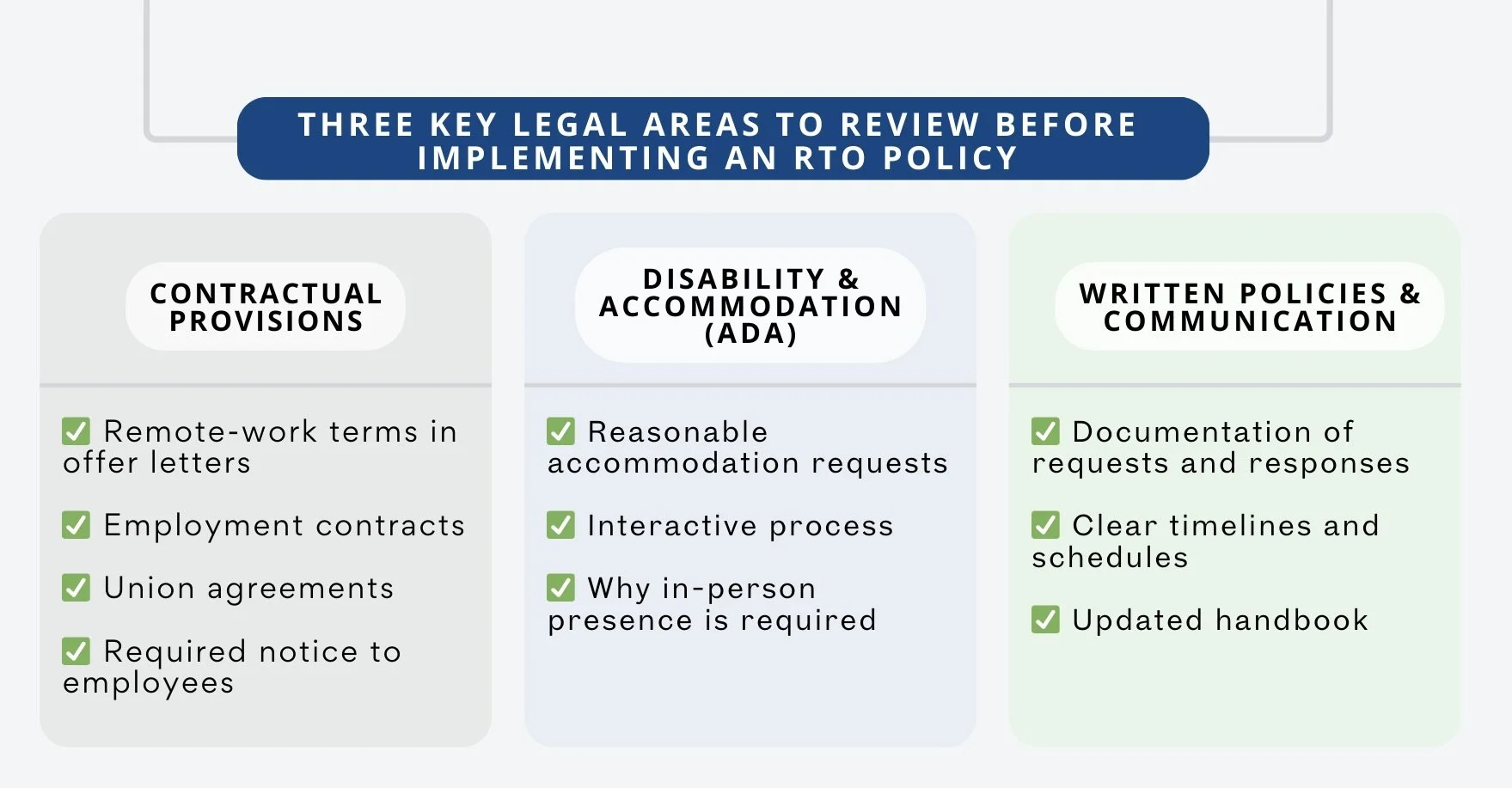
RTO mandates touch contract law, disability law, and workplace policy — review all three before acting.
Next month we will provide updates on some recent litigation on issues related to remote work, return-to-office mandates, and accommodation requests.
Contact us to book a call if your company is considering implementing a return to office policy, or working on updating written guidelines around hybrid work arrangements, and you have questions about any legal concerns.